


Blessed Catherine and Judith Cittadini
At the roots of the foundation
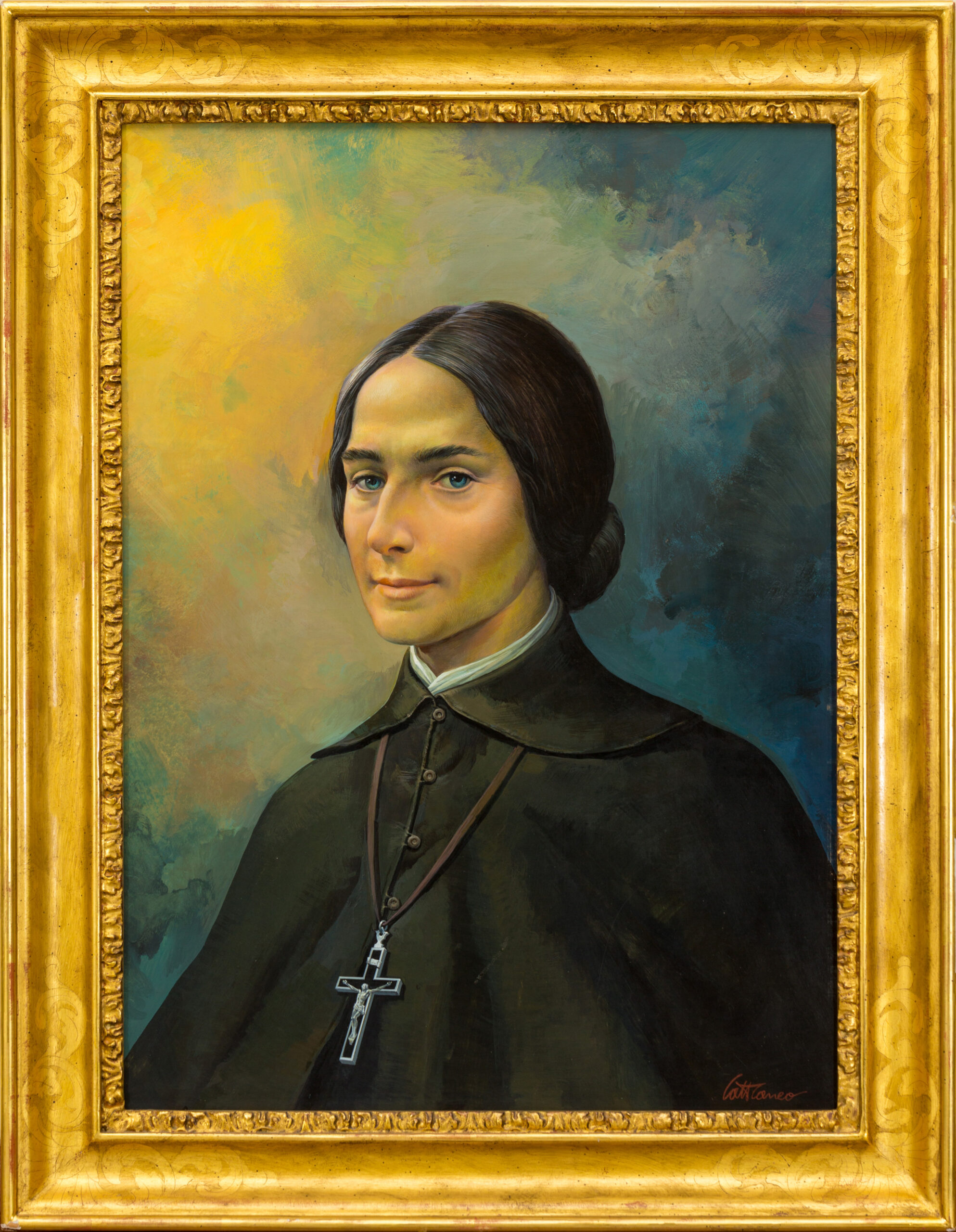
Catherine Cittadini
(1801-1857)
“To belong to Christ, to bring others to Christ”
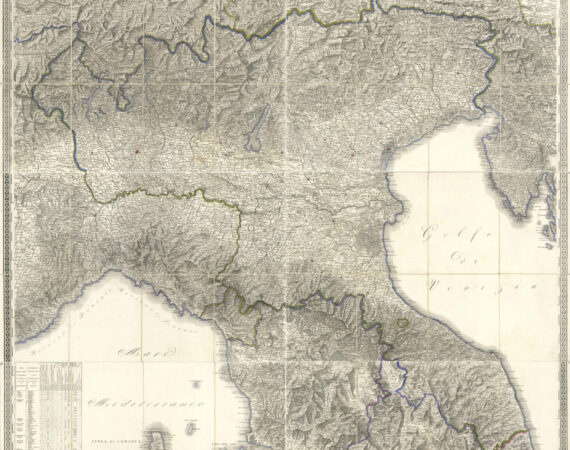
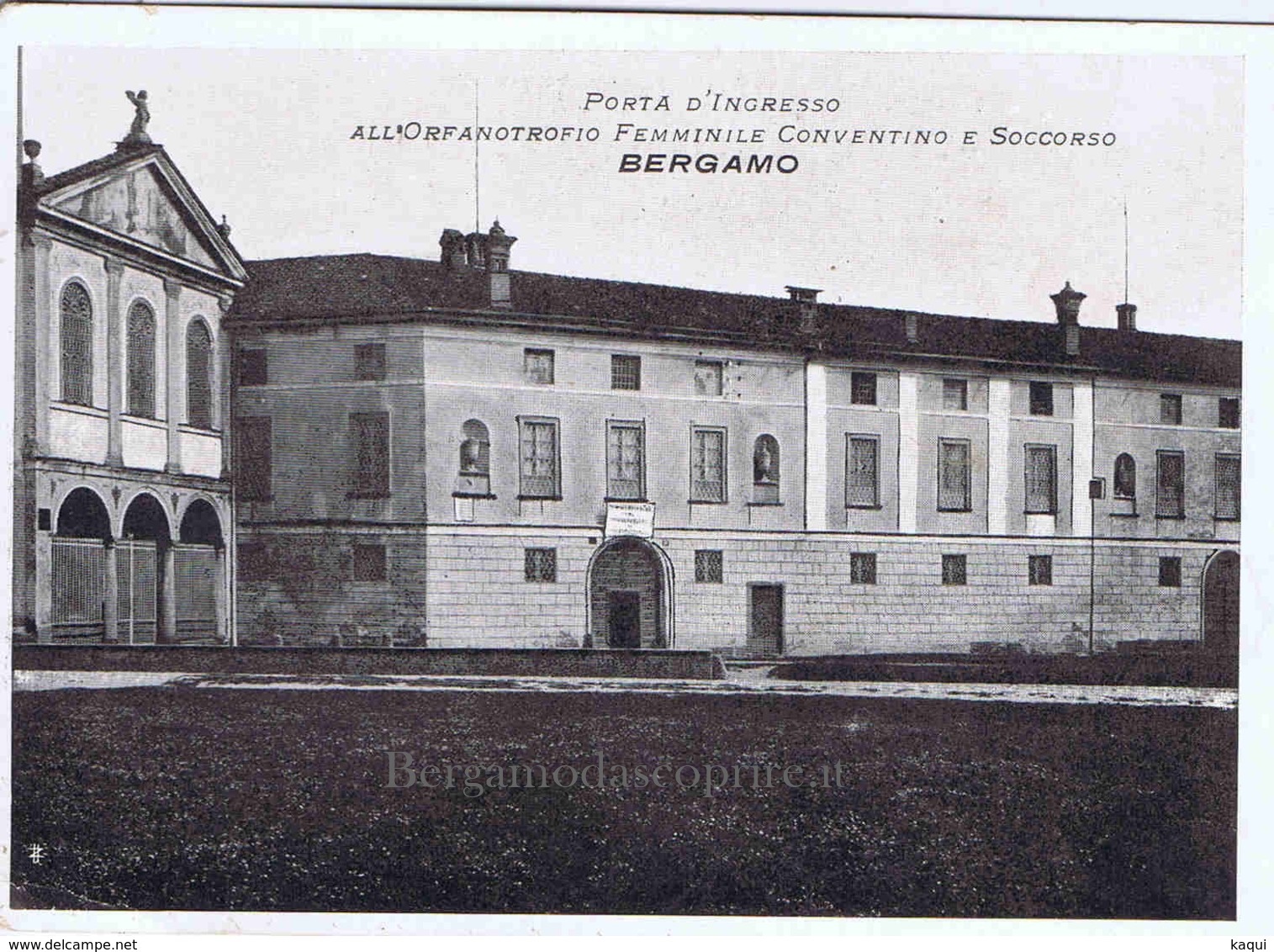
Catherine Cittadini was born in Bergamo on September 28, 1801, to Giovanni Battista and Margherita Lanzani, and was baptized on September 30 in the parish church of St. Alexander in Colonna. In 1808, orphaned by her mother and abandoned by her father, Catherine, together with her sister Judith born in 1803, was welcomed into the orphanage of the Conventino in Bergamo. Here, under the guidance of Prior Don Giuseppe Brena, she lived an intense Christian life, which contributed to forming in her a robust faith, deep trust in the Lord, active charity, tender devotion to Our Lady, a great sense of responsibility and diligence in fulfilling her duties. After obtaining her elementary teaching diploma, in 1823 she left the Conventino to move with her sister to live with their priest cousins Giovanni and Antonio Cittadini in Calolzio, a parish in the Diocese of Bergamo.
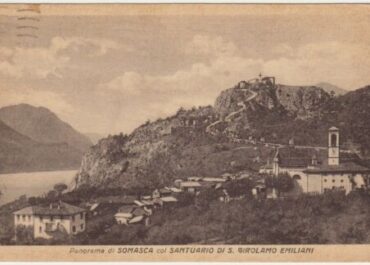
Here the sisters remained for about two years, finding in their priest cousins a secure spiritual guide and a pastorally very active environment. Catherine was hired as a provisional teacher and in 1824 as a permanent teacher in the municipal girls’ school of Somasca, a hamlet of the Municipality of Vercurago near Calolzio. With her sister Judith, she matured the desire to enter a religious Congregation.
They therefore asked for advice from Don Giuseppe Brena, their spiritual director at the Conventino in Bergamo, who indicated to them that God’s will consisted in remaining in Somasca: they themselves would be the foundational stones of a new religious family in that small town already guardian of the sanctity of St. Jerome Emiliani.
In 1826, together with her sister Judith, she moved permanently to Somasca in a rented house. In October of the same year, she bought a building which, renovated and expanded with further purchases, would become the seat of a boarding school and later of the religious institute of the Ursuline Sisters.
In Somasca, Catherine found valid guidance for her spiritual life in the Somascan Clerics Regular, founded by St. Jerome Emiliani, whom she felt as a “father” from her orphaned childhood and whose example of charity and poverty she admired and followed.
Her role as teacher integrated her into the life of the small town of Somasca, where Catherine actively participated in parish life: she was a teacher of Christian doctrine, enrolled in various confraternities, participated with her companions and students in sacred functions, opened her house to welcome young women to animate and recreate them according to the oratorian style.
Catherine carried out her task with such fervor and commitment that she always earned the highest praise from authorities and unanimous consensus from the population.
Her attention to the neediest and poorest led her to extend, not without great sacrifices of every kind, her charitable work to orphaned girls or those unable to attend the municipal school or coming from distant towns. Thus was born in 1832 the private “Cittadini” school and in 1836 the Boarding School, whose direction Catherine entrusted to her sister Judith.
Positive evaluations of the private school and the educational institution multiplied: indeed, the formation of the students, inspired by the values of Christian life, prepared the girls to make wise life choices, lived with Christian coherence, so that an exceptional contemporary witness could write: “The most convincing proof, which alone suffices to clarify the excellent instruction that those girls received from the pious teachers, is the constant flourishing of that boarding school until now, a consequence of the excellent success of their students, who not only enriched themselves in Somasca with every religious, moral and civil virtue and those arts befitting women, but also brought such benefits to their towns, where many either established new schools or revived those already declined, with such profit to morality that those parish priests still regard the Ursuline teachers of Somasca as the principal benefactresses of the people they direct.”
Catherine’s entire life was always accompanied by great trials. In 1840, Judith died suddenly at only 37 years old, with whom she had shared everything: family sufferings, formation, ideals, projects, activities. In 1841, with the death of Don Giuseppe Brena and cousin Don Antonio Cittadini, she lost other very valuable supports.
In 1842, Catherine herself was struck by a serious illness, from which she recovered miraculously through the intercession of Our Lady of Caravaggio and St. Jerome Emiliani.
In 1845, she had to leave teaching in the municipal school to dedicate herself entirely to the boarding school, the care of orphans, and the guidance of the companions who had joined her, determined to share not only her educational activity but also her will to consecrate herself entirely to the Lord in religious life.
In 1844, Catherine, to give stability to her work, at least civilly, stipulated with three companions an “Instrument of Society and Fate and also of reciprocal donation or Annuity,” which already presented many characteristics of a religious Institute. In 1850, she obtained from Pius IX the Decree of erection of the private Oratory where the Most Holy Eucharist could be preserved. In 1850-51, she addressed various petitions to the Bishop of Bergamo, Msgr. Carlo Gritti Morlacchi, to obtain approval of her “small religious family” and a rule, but the time was not yet ripe. In 1854, Catherine had a meeting with the new Bishop, Msgr. Pietro Luigi Speranza, who encouraged her to write the rules herself and promised his help. Catherine drafted them on the model of the constitutions of the Ursulines of Milan, but when she presented them to the Bishop, they were not accepted.
Without giving up, she prepared a new text, which she forwarded to the Bishop on September 17, 1855, accompanied by a request in which she asked for approval of the Institute with the title of Hieronymite Ursulines. Msgr. Speranza approved the rules
Always lucid, trusting and in continuous prayer, she exhorted her companions to accept the Lord’s will with serenity, because everything would continue. She died on May 5, 1857, after a day of agony, serenely and saintly, surrounded by a reputation of sanctity and greatly mourned by her daughters, the students, and the population, leaving to all her luminous example of profound spiritual maturity.
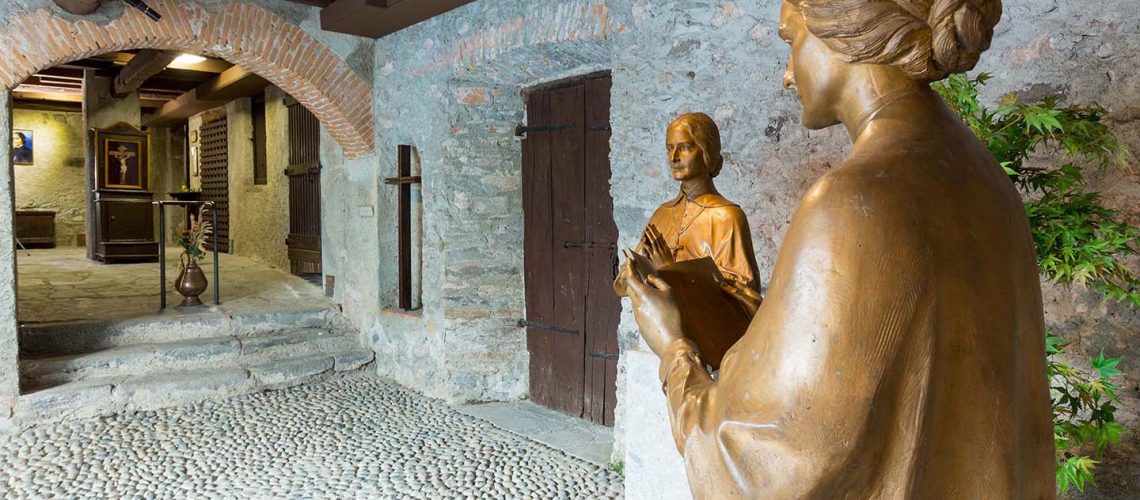
Shortly after her death, and precisely on December 14, 1857, the decree of canonical erection of the Institute arrived from the Bishop of Bergamo.
The Institute would receive pontifical recognition on July 8, 1927.
In the first decades, the intense educational apostolate of Catherine Cittadini’s Institute was concentrated in Somasca and in Ponte San Pietro, a large town in the province and diocese of Bergamo.
From 1902, it progressively extended to many parts of Italy and beyond national borders: today her spiritual daughters carry out their educational mission also among Italian emigrants in Switzerland and Belgium, among the poor of Latin America (Bolivia, Brazil) and Asia (India, Philippines).
Although the reputation of sanctity persisted over time, the Cause of Beatification and Canonization of the Servant of God began only in 1967, when by Decree of April 21, 1967, the Bishop of Bergamo Msgr. Clemente Gaddi established the historical Commission which concluded its work on May 5, 1969. On August 5, 1971, the diocesan Ecclesiastical Tribunal was established for the ordinary Process which concluded on December 14, 1978.
On January 12, 1979, the Process opened at the Congregation for the Causes of Saints.
The Decree on the writings of the Servant of God was approved on January 12, 1981, after which the drafting of the Positio began.
After completing the Positio Super Virtutibus on September 28, 1989, the session of historical Consultors was convened on December 19, 1989, and on January 16, 1996, the peculiar Congress of theological Consultors was celebrated with favorable outcome. On December 3, 1996, the ordinary Congregation of Cardinals and Bishops was held, and on December 17, 1996, His Holiness John Paul II issued the Decree on the heroicity of virtues of the Servant of God Catherine Cittadini, Foundress of the Ursuline Sisters of Somasca.
Subsequently, on December 20, 1999, the Decree “super miraculo” was issued for the healing attributed to the intercession of Catherine Cittadini of little Samuele Piovani.
With her beatification, the Pope indicates Catherine as a model of everyday sanctity, as a luminous example of true motherhood in Christ and unconditional dedication to young generations.
Taken from “Dicastery for the Causes of Saints“
Judith Cittadini
Witness
“When her precious death became known in the morning, she was mourned by all; everyone proclaimed her a saint, even strangers understood the loss.
She was a shining model of the most beautiful virtues” (T. O. p. 20)
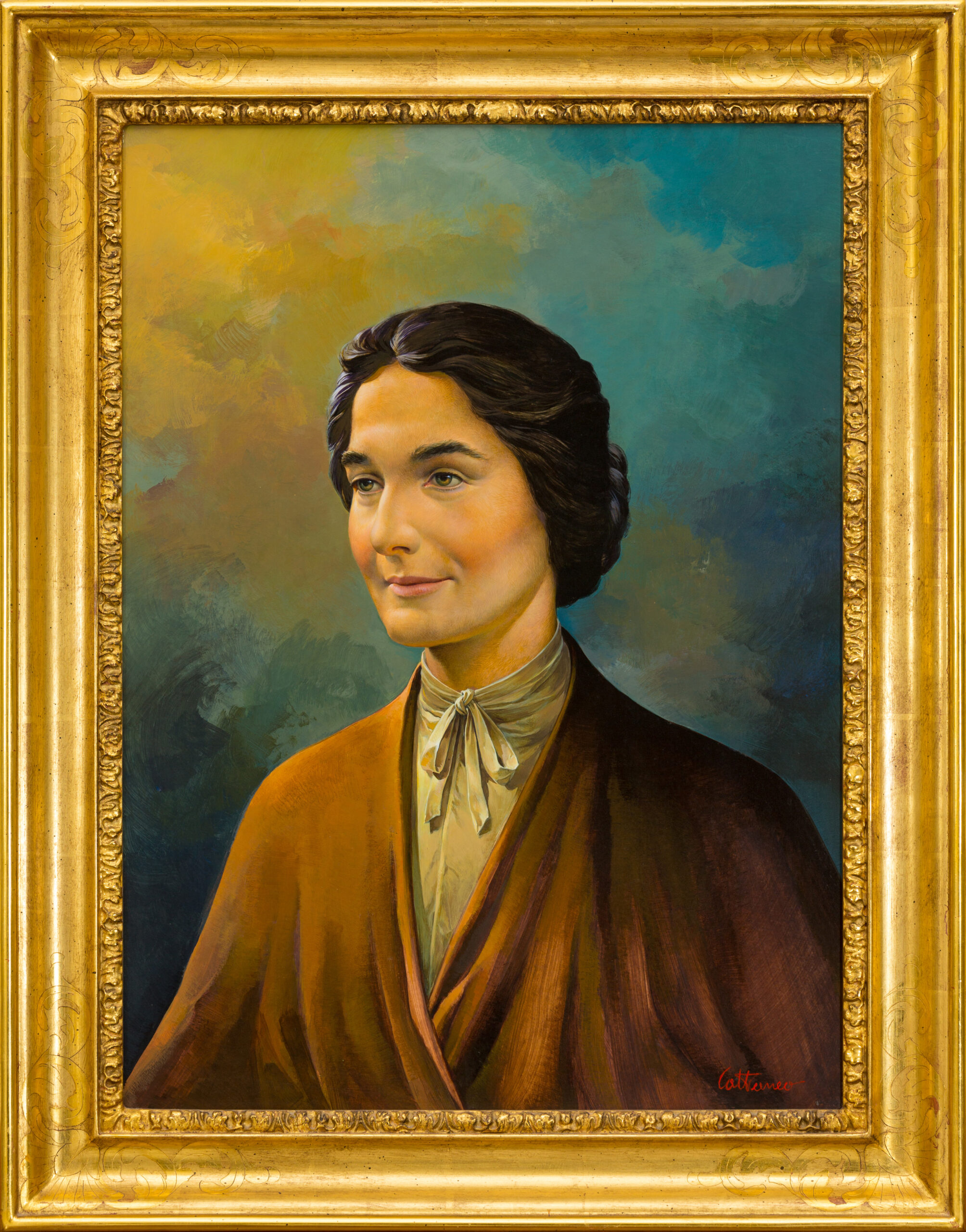
Mother Judith, precious stone at the origin of “our little family” of Ursulines of St. Jerome in Somasca.
The traits of everyday sanctity that characterized her life:
Fraternal and planning sharing with Blessed Mother Catherine
It is beautiful to savor again the radical unity of affections and intentions that characterizes the Cittadini sisters. To think of them together at the Conventino: together seeking and realizing their life project, following the prophetic indication of Don Giuseppe Brena: together for about twenty years living the joys, labors and sufferings of their existential journey of total donation as true mothers in Christ: together in that spiritual communion that lasts beyond time (“…she assures her that she will pray for her and from heaven will protect her, assist her as if she were still near. Cittadini confessed several times to have experienced its effects”) (T.O. p.20)
The strength of virtues
Certainly very effective is the expression from the original texts that presents Judith to us as a “shining model of the most beautiful virtues”: humility, perfect submission, charity, prudence, modesty, imperturbability of character constituted her daily equipment.
It is easy to compare her to the woman fully realized according to the biblical ideal: faithful and industrious spouse in the house clothed with strength and dignity, attentive to the needy, wise and capable of teachings of goodness (cf. Proverbs 31:10-30).
Mother Judith is the spouse of the Heavenly Bridegroom, capable of true motherhood in Christ, resplendent with virtues and concrete and effective educational care for the girls entrusted to her, for whom she was all to all and to each one in particular.
The quality of educational service
Judith lived with great dedication and professional capacity her service as teacher of the private school, director of the female College-boarding school of Somasca, and teacher of Christian doctrine for adults (class V cf. Positio p.178 and 185). The original texts always tell us that she was
The gift of femininity
Judith, as a true woman and mother in Christ, puts her feminine intuition at the service of the educational mission, accompanying the girls in their growth journey with personalized interventions: she knows how to encourage, console, correct, call to attention.
She is attentive to detail without losing sight of the overall educational path and is respected, obeyed and loved by her students (T.O. p. 20).
A woman who walks alongside with the strength and tenderness of her being sister and mother in Christ, certain that those creatures are entrusted to her as precious treasure (cf. Rules 1855, XVI,1).
A woman attentive to decorum and feminine peculiarity, who, even in economic constraints, is never neglectful.
It is always beautiful to read in the Cash Journal of the Cittadini sisters the notation of the expense incurred
In 1837 by Mother Catherine to give her sister Judith earrings as a gift: “Account to Mr. Zucchi of 12 lire for having bought Judith two curl pendants” (cf. Positio p.251).
Narration of a gift: simple account of an entirely feminine attention to express a greater Beauty.

KEY WORDS
Pedagogy
- Educate
- Accompany
- Planning
- Listening
- Entrusting
- Discernment
- Commitment and responsibility
- Sharing
- Everyday life
- Patience with time
Educational pedagogy
In Catherine and Judith Cittadini’s project, the systematic nature of their specific educational vision passes through the evangelical principles of love, dedication, encounter with others, valuing the subject-person as protagonist of a divine project. The fundamental purpose is the development of the person according to the Christian vision of life that takes into consideration the supernatural end of man, the dignity of the person, individual freedom and responsibility in the community moment.
We read in the Rules of 1855 and 1857:
“It will be their care to plant in the tender souls of the girls the seeds of the principal and fundamental virtues…They will neglect nothing that can contribute to their spiritual and temporal advantage…The Sisters must never forget that the cultivation of young people is a special obligation of their Institute.”
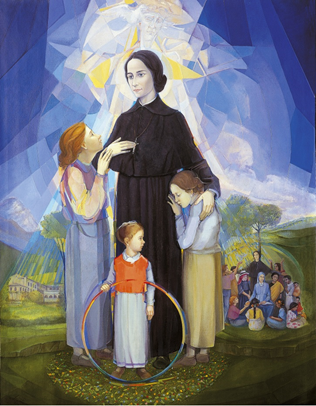
The spirit founding the pedagogical art of Catherine and Judith Cittadini is to be read directly in the evangelical style: love, abandonment, “becoming all to all” with a mother’s heart. Therefore they educate and teach literacy with life examples, with a familiar educational style, pursuing the promotion of the person within a pedagogy of small things, of the everyday in a proper balance between ascetic life, prayer and educational-formative activity.
Within the education of the person, Catherine and Judith choose animation as an educational style that tends to discover and leverage the accessible point to good that is inherent in each one. Animation as an educational style produces growth of conscience and freedom and matures the person by focusing on their capacity for research and taste for truth. What matters is the intensity of participation and personal elaboration, the qualities, the attitudes that develop in the person and that make them responsible, the main agent of the processes that concern them.
“The teachers evidently succeeded in transmitting their own enthusiasm to the students, aroused in them the thirst to learn; they made them intuit what boundless horizons could open before their eyes even just by learning to read and write……Being teachers for the Cittadinis was not just a profession: it was their mission, the form in which to actualize the total gift of self” [from the book “Educational Motherhood” by Sara Regina].
For Catherine and Judith, the primary task of education is to involve as much as possible to communicate and transmit experientially the values on which she first founded her life.
“Emotionally involving” the girls entrusted to them means putting into action three fundamental dynamics: the dynamic of closeness, the dynamic of gesture, and the dynamic of word through their personal qualities and peculiar characteristics. In this regard, we read in the Documents of Origins:
“It was beautiful to see her, all kindness and composure, among those lively young girls in the school, trying to break down and clarify the concepts of every subject she taught. She took advantage of every opportunity to direct those tender hearts and young minds to God, which, like soft wax, received those impressions that would be indelible… She was attentive and very astute, knowing how to take into account the age, temperament, and various dispositions of each one, and with gentleness and energy not only corrected faults but studied the defects and straightened the wrong inclinations of those young souls…”
Educating according to Caterina Cittadini’s style cannot be improvised, but requires gifts such as the charism of relating to others, the ability to understand, to be together, to speak and listen deeply, a careful knowledge of humanity and a strong sense of belonging to the Church and human community, a proven human balance, adequate maturity, and the willingness to serve primarily as a mission.
Prayer to Blessed Caterina Cittadini
O God, supreme giver of all good,
who instilled in the heart
of Blessed Caterina Cittadini
a feeling of profound humility
and an untiring zeal
in procuring your greater glory,
especially through the Christian education of youth,
please grant me the grace
that I ask through her intercession
and make me capable of being,
like her,
a faithful witness
of your merciful love.
Our Father, Hail Mary
Glory to the Most Holy Trinity.
Prayer to Giuditta Cittadini
Lord God, Merciful Father,
we praise and thank you
for the gift of Giuditta Cittadini,
authentic witness
of your educational passion for humanity.
Faithful to your invitation, she dedicated herself
to the Christian education of youth
with a mother’s heart.
With the grace of your Holy Spirit,
place her in your Church
as a model
of life totally spent
in conformity
to Jesus the divine teacher.
Grant that, through her example,
we may adhere to your plan of salvation
and, through her intercession,
obtain the good we so deeply desire.
We ask this of you,
for the glory of your name. Amen
Our Father, Hail Mary
Glory to the Most Holy Trinity.
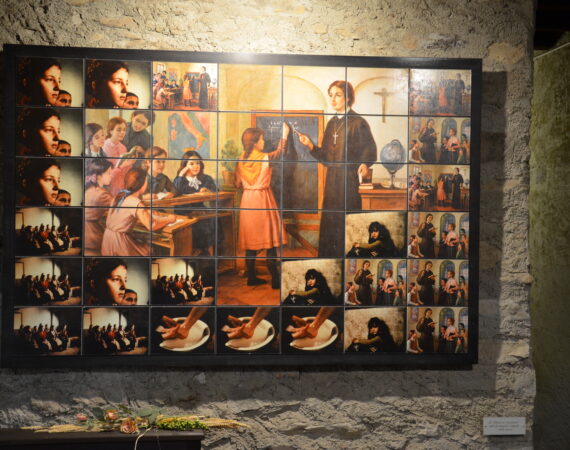
Prayer recited by Blessed Mother Caterina
Whatever I do, I will do all with Jesus!
If I am awake, I shall see only Jesus, if I dream, I shall dream only of Jesus…my book and my teacher shall be Jesus.
My relief shall be none other than Jesus!
If I pray, it shall be only with Jesus, if I hunger or thirst, I shall live on Jesus, in my ailments my physician shall be Jesus. My remedy is the love of Jesus.
When I die, I shall die in Jesus!
My last word shall be the Most Holy name of Jesus, to close my eyes I want only Jesus, for a tomb the Heart of Jesus with the inscription: “I rest in Jesus…”
Sources and Bibliography
Cittadini papers are deposited at the Archive of the General House of the Ursuline Sisters of Somasca, Bergamo;
Historical Office of the Sacred Congregation of Saints, Positio super virtutibus, Rome, 1989.
Educational Maternity: a biography of Caterina and Giuditta Cittadini / Sara Regina
Publication: Cinisello Balsamo : San Paolo, 2000
Description: 238 p., [16] plates : ill. ; 23 cm. | Series: The Protagonists ; 39
Format: Book | Held by: National Central Library of Florence
For God and for the School: biography of Caterina Cittadini / Paolo Lunardon
Publication: [S.l. : s.n.], printed 1975 (Curno : Tipo-lito Unipress)
Description: 169 p., [8] plates ; 22 cm.
Format: Book | Held by: National Central Library of Florence
The Servant of God Caterina Cittadini / edited by an Ursuline Sister of Somasca
Publication: Savona : Tip. Officina d’arte, printed 1969
Description: 71 p. : plates ; 16 cm
Format: Book | Held by: National Central Library of Florence
A Soul and an Institution. Caterina Cittadini founder of the Ursuline Sisters of Somasca / A. Scola
Bergamo, Soc. editr. S. Alessandro, 1941
Church and Educational Perspectives in Italy between Restoration and Unification / L. Pazzaglia (ed.)
Brescia, La Scuola, 1994, pp. 342 and 431
Church, Education and Society in Early Nineteenth Century Lombardy / Sani (Ed.)
Milan, Centro ambrosiano, 1996, pp. 57, 67, 73-75, 80, 98, 102, 106, 125, 132-133 and 159
Ursuline Sisters Institute, Blessed Caterina Cittadini
Gorla, Litonova, 2002
Caterina and Giuditta Cittadini: educating as a choice of love / B. Ferrari
Bergamo, Velar, 2008
Support the Institute
Maecenas imperdiet Vestibulum rutrum aliquet eros, eu euismod ex pellentesque.